How to Improve Customer Satisfaction A Modern SaaS Playbook
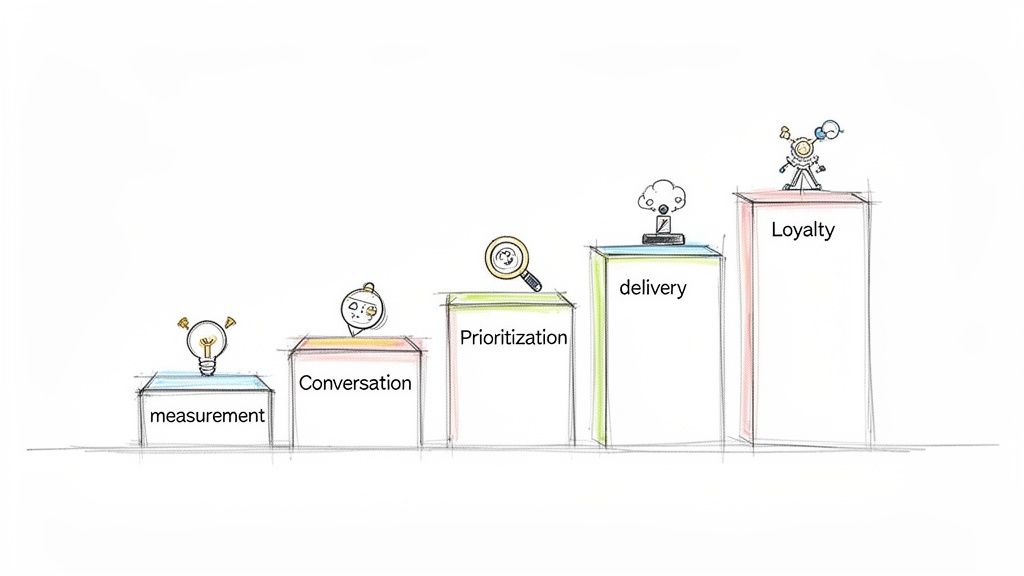
Improving customer satisfaction isn't a mystery; it's a process. It boils down to a clear, five-stage framework: diagnose where you stand right now with a mix of data, measure what matters with the right metrics and qualitative signals, prioritize what to fix using revenue-weighted feedback, implement those changes across your teams, and finally, close the loop with your users to build real loyalty.
This isn't about just managing complaints. This is a strategic approach that turns customer feedback from a cost center into a reliable engine for growth.
Your Starting Point for Better Customer Satisfaction
For any SaaS business today, customer satisfaction is much more than a feel-good metric. It’s a direct indicator of your company's health and a powerful lever for revenue.
Think about it: when over 60% of consumers admit they'd jump to a competitor after just one bad experience, passively waiting for feedback to trickle in is a recipe for churn. You need an active, structured playbook to get ahead of it. This guide gives you exactly that—a practical framework to turn customer insights into measurable business outcomes. The goal is to shift your entire team from just reacting to support tickets to proactively shaping the customer experience.
Moving Beyond Simple Metrics
Metrics like the Customer Satisfaction Score (CSAT) and Net Promoter Score (NPS) are table stakes. They're essential, but they only tell you part of the story. A high NPS score is fantastic, but it doesn't explain why customers are such big fans or which specific features are making them stick around. On the flip side, a low CSAT score flags a problem but offers no path to a solution on its own.
The real breakthrough happens when you start pairing these quantitative scores with qualitative insights. By digging into the actual words customers use in support chats, feedback forms, and sales calls, you uncover the crucial context behind the numbers.
This playbook will walk you through building a system that captures both types of feedback without friction. You’ll go from just knowing what your satisfaction score is to understanding why it is what it is—and exactly what to do about it.
A Framework for Actionable Improvement
A reactive approach to feedback inevitably leads to chasing the loudest voices or prioritizing shiny new features based on gut feelings. A structured process, however, ensures your efforts are laser-focused on what truly matters to your most valuable customers. To build an effective feedback loop, you need a systematic approach, which is where tools like FeatureBot can make a huge difference.
Here’s the five-stage framework we’ll break down step-by-step:
- Diagnose Your Current State: First, establish a clear baseline. This means gathering honest feedback from multiple channels, not just your annual survey.
- Measure and Track Signals: Next, implement your core metrics (CSAT, NPS) and set up systems for collecting that rich, unstructured feedback from day-to-day interactions.
- Prioritize Initiatives: This is where you get smart. Use techniques like feedback clustering and MRR-weighted prioritization to focus your resources where they'll have the biggest impact.
- Implement Changes: Roll out improvements in a coordinated way across your product, onboarding, and support teams.
- Close the Loop: Finally, tell customers what you did. Communicating back to them shows their feedback was heard and acted upon, which is one of the most powerful ways to build lasting loyalty.
Diagnosing Your Current Satisfaction Levels
Before you can start improving customer satisfaction, you need a clear, unfiltered picture of where you stand right now. This isn't about guesswork; it's about creating a foundational baseline that will guide every decision you make. A solid diagnosis combines both hard numbers and real-world customer stories to give you a complete view of your customer health.
The first move is to get beyond those generic annual surveys. They have their place, but the real magic happens when you measure satisfaction at key moments in the customer journey. You need to capture feedback while the experience is still fresh in your user's mind.
Gathering Quantitative Signals
Quantitative data gives you the "what." These are the hard numbers that act as your vital signs, tracking satisfaction over time and alerting you to any sudden changes in customer sentiment. The trick is to be strategic about it—don't just blast surveys out randomly. Instead, place them at specific, meaningful touchpoints.
Your focus should be on a few core metrics:
- Customer Satisfaction Score (CSAT): This is your in-the-moment check-in. A simple "How satisfied were you with this experience?" on a 1-5 scale works wonders after a user closes a support ticket or finishes their onboarding.
- Net Promoter Score (NPS): Think of this as your long-term loyalty gauge. It asks how likely a user is to recommend you. Because it measures overall brand health, you'll want to send this out periodically—maybe once a quarter—rather than after every single interaction.
- Customer Effort Score (CES): This metric gets right to the heart of friction. Asking "How easy was it to solve your problem today?" can uncover hidden pain points in your product or support processes.
When you collect these scores at different stages, you can start connecting the dots. For instance, you might find that your support team has stellar CSAT scores, but your CES is in the gutter. That’s a huge clue: your agents are great, but getting help is just too difficult. You can find more strategies for collecting and dissecting feedback on the FeatureBot blog.
Mining for Qualitative Gold
While numbers tell you what's happening, qualitative feedback tells you why. This is where you uncover the context, the emotion, and the specific details you need to make smart changes. And often, the best feedback isn't something you have to ask for—it's already sitting in the channels your team uses every single day.
The most honest feedback isn't always found in a formal survey. It's hidden in plain sight within the unstructured, day-to-day conversations your team is already having with customers.
To find these nuggets of gold, you have to systematically mine your existing communication channels. This means looking beyond formal feedback forms and digging into the unsolicited opinions that customers share freely.
Start digging in these places:
- Support Chat Transcripts: These are an absolute goldmine. Look for patterns—recurring questions, moments of confusion, or clear signs of frustration that point to a bigger product or usability issue.
- Sales Call Notes: Your sales team is on the front lines. They hear directly from prospects about their biggest pain points, what features they're desperate for, and why they ultimately choose you (or one of your competitors).
- Social Media Mentions: Keep an eye on social media and review sites for candid comments. This is where you’ll find people sharing their raw, unfiltered thoughts—both good and bad.
When you pair these unstructured comments with your quantitative scores, you get a powerful, multi-dimensional view of the customer experience. A sudden dip in your NPS score, for example, might seem mysterious on its own. But when you cross-reference it with support chats from the same week and see a flood of complaints about a buggy new feature, the story becomes crystal clear. This combined approach turns raw data into a roadmap, showing you exactly where to focus your efforts.
3. Turn Customer Feedback into Smart Priorities
So, you've diagnosed your satisfaction levels. Now what? You’re likely staring at a mountain of raw data—support chats, survey responses, social media comments, and call notes. This feedback is gold, but without a system to make sense of it, it's just noise. This is where you move from listening to acting, turning those customer voices into a clear, actionable roadmap.
It's tempting to jump on the latest or loudest request. We've all been there. But a truly effective strategy means finding the real patterns hidden in the data and, more importantly, prioritizing them based on what will actually move the needle for the business.
This is all about creating a repeatable process to sift through feedback, identify the big opportunities, and get them into the right hands.
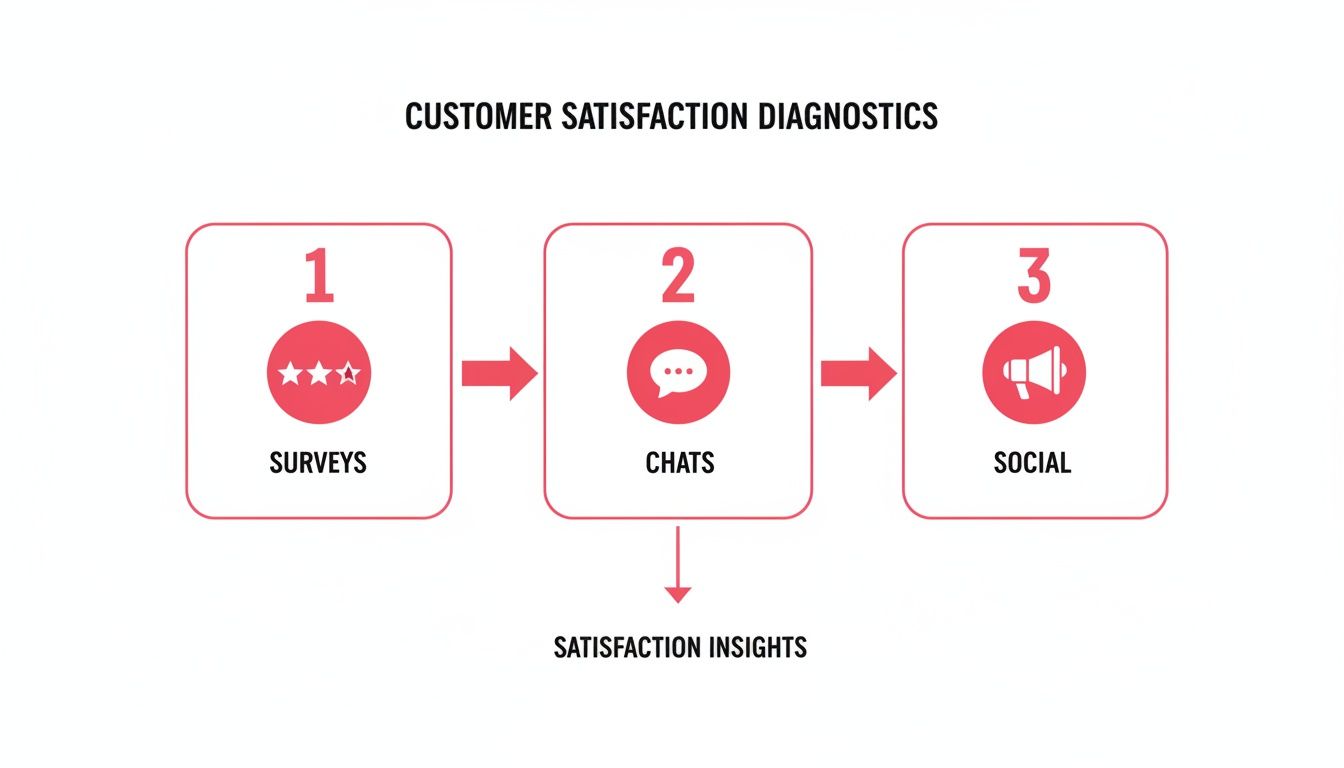
As you can see, pulling from multiple channels is key to getting a full 360-degree view of the customer experience.
From Clutter to Clarity with AI
Manually sifting through hundreds or thousands of individual comments isn't just a massive time sink; it's also riddled with human bias. It’s easy to get swayed by a single, eloquently written complaint or miss a subtle but critical trend buried across dozens of separate conversations. This is where modern tools can be a game-changer.
AI-powered semantic matching automatically groups similar pieces of feedback, even when customers use completely different words. Think about these requests:
- "I wish I could export to CSV."
- "Need a way to download my data."
- "Where is the reporting export feature?"
An AI tool instantly recognizes these are all about the same thing and clusters them into a single theme. This automated clustering reveals powerful trends you might otherwise miss and cuts through the noise of duplicate requests, giving you a clear signal of what truly matters.
Prioritizing by Revenue, Not Just Votes
Once you have these clear themes, the next question is what to tackle first. The old-school way of counting upvotes is fundamentally flawed because it treats feedback from a free user the same as feedback from your largest enterprise account. This often leads to building popular but low-impact features while ignoring critical issues that could be costing you serious revenue.
A much smarter approach is MRR-weighted prioritization. This model links every piece of feedback directly to the monthly recurring revenue of the customer who gave it.
Instead of asking, "How many people want this?" you start asking, "How much revenue is tied to this?" This simple shift aligns your product roadmap directly with your business goals.
Let's look at two feature requests. One has 100 upvotes from free and small accounts, totaling $500 in MRR. The other has just 10 upvotes, but they're from enterprise customers totaling $15,000 in MRR. With a revenue-weighted model, the choice is obvious. You focus on the work that protects and grows your most valuable accounts.
The table below breaks down this strategic shift from simply counting votes to focusing on revenue impact.
Prioritization Models From Votes to Revenue Impact
| Prioritization Method | Primary Metric | Typical Outcome | Ideal For |
|---|---|---|---|
| Traditional Upvoting | Number of votes/requests | Building features for the most vocal users, who may not be the highest-value customers. | Startups in early discovery phase; consumer-focused products. |
| MRR-Weighted | Total MRR of requesting customers | Aligning product roadmap with revenue goals; reducing churn in high-value segments. | B2B SaaS companies; businesses with tiered pricing. |
While upvoting has its place, weighting feedback by revenue ensures your development resources are spent on initiatives with the greatest potential financial return.
Creating Actionable Insights for Your Team
The final piece of the puzzle is translating these prioritized themes into clear, actionable items for your product and engineering teams. A vague request like "Improve the dashboard" is completely unhelpful. To get real results, your team needs the full story.
A truly actionable ticket or story should include:
- The core problem: A clear summary of the issue or request.
- The "why": Direct quotes and context from the customers who reported it. This is huge for building empathy.
- The scope: How many users are affected and the total MRR at stake.
- User context: Key details like the user's journey, session data, or any errors they hit.
This level of detail empowers your engineers to understand the root cause and build the right solution the first time. It turns an unstructured comment into a well-defined task with clear business justification.
This methodical approach is becoming non-negotiable. According to Forrester's 2025 Global Customer Experience Index, a staggering 21% of brands saw their CX scores drop, while only 6% improved. Companies that use AI to cluster feedback and prioritize by revenue have a massive advantage, allowing them to focus on high-MRR features and close the loop with customers faster than competitors stuck in the past.
Putting Changes into Action Across Your Teams
You've done the hard work of collecting feedback and you've got a prioritized list of customer-driven initiatives. Now for the most important part: actually doing something about it. A great roadmap is just a document until your team brings it to life. This is where you wire your feedback loop directly into your daily operations, turning those valuable insights into real improvements for your product, engineering, and support teams.
The key is to create a system where customer feedback flows naturally into the tools your teams already use every single day. We're not trying to add another dashboard they have to check. It's about weaving the voice of the customer directly into their workflow.
Integrate Feedback Into Your Existing Workflows
For feedback to be genuinely useful, it has to show up where the work is actually happening. Manually copy-pasting customer comments from a spreadsheet into your project management tool is a recipe for disaster—it's slow, mistakes happen, and it just doesn't scale. A much better approach is to automate this process so that critical insights never get lost in the shuffle.
This means setting up smart integrations that can do things like:
- Instantly push a critical bug report to GitHub or Jira as a new issue, automatically attaching all the user session data and error logs.
- Create a new task in Asana or Trello the moment a feature request comes in from a high-value account.
- Trigger an urgent notification in a dedicated Slack channel when a sudden spike in negative feedback suggests a service-wide outage.
By piping this information straight into their environment, you empower your teams to see and act on customer needs without breaking their stride.
The fastest way to get everyone on the same page is to make customer satisfaction a shared responsibility, not just a job for the support team. When an engineer sees the real user context behind a bug report, they don't just fix code—they solve a person's problem.
This direct flow is crucial for resolving issues quickly. In fact, research shows that 72% of customers expect immediate service, and those whose problems are handled fast are 2.4 times more likely to stick around. As Zendesk's customer experience research points out, speed is loyalty. For SaaS teams, this means capturing feedback from conversations, using AI to cluster similar issues, and then alerting engineering through GitHub—all weighted by MRR to focus on fixes that protect your bottom line.
Equip Teams with the Full User Context
One of the biggest reasons customer satisfaction efforts fail is a lack of context. An engineer gets a vague ticket that says, "The dashboard is slow." What are they supposed to do with that? They end up wasting precious time just trying to figure out what the user was even doing. To build the right fix the first time, your teams need the whole story.
An actionable piece of feedback is so much more than just a comment. It has to be enriched with data that paints a complete picture of that user's experience.
What Every Feedback Ticket Should Include:
- Session Data: What browser, OS, and device was the user on? Screen resolution?
- User Journey: Which pages did they visit right before the problem occurred? What clicks led them there?
- Account Details: Who is this user? What's their plan, and what's their MRR?
- Direct Quotes: The exact words the customer used to describe their frustration.
When you arm your product and engineering teams with this level of detail, they stop being order-takers and become empowered problem-solvers. They can actually empathize with the user and pinpoint the root cause, which always leads to better, more thoughtful solutions. If you're looking to move beyond simple upvote-based systems, it's worth exploring alternatives to Productboard that prioritize this kind of deep user context.
Align Support and Success for Proactive Improvement
Your customer-facing teams are your eyes and ears on the ground, and the patterns they spot are goldmines for proactive improvements. Instead of just bouncing from one ticket to the next, support and success teams can use clustered feedback themes to identify bigger opportunities to make the entire customer journey smoother.
For example, maybe they notice a lot of confusion around a specific feature during onboarding calls. They can take that insight and proactively:
- Work with the product team to see if the UI can be simplified or if a few helpful tooltips could be added.
- Team up with marketing to create a new tutorial video or a detailed knowledge base article.
- Refine their own onboarding checklists to tackle that specific point of confusion before it even comes up.
This creates a powerful, cross-functional flywheel. Every team becomes aligned around the shared goal of making customers happier, and the support team is transformed from a reactive cost center into a strategic partner that actively makes the product better.
Closing the Loop to Build Real Customer Loyalty
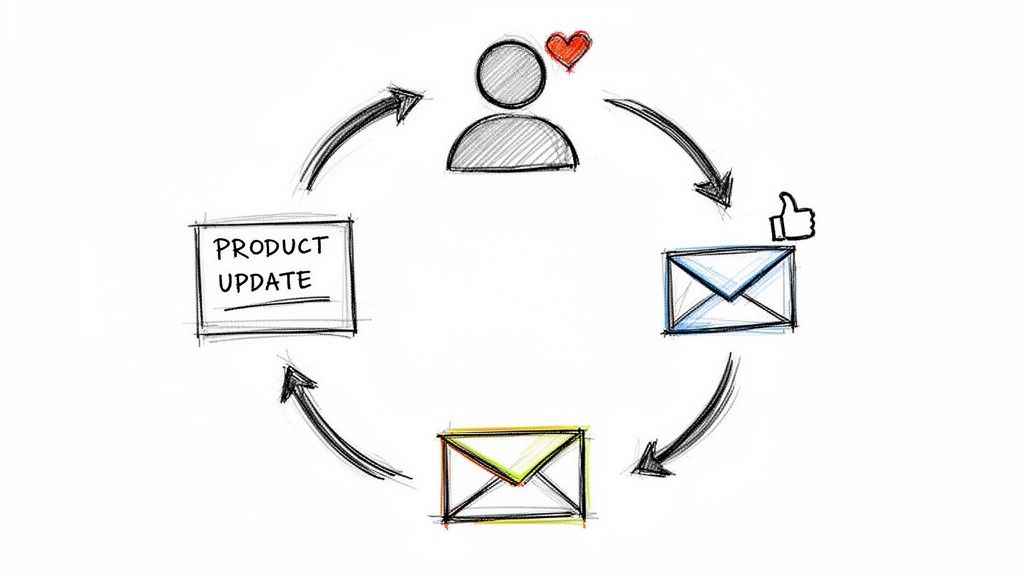
You’ve done the hard work. You gathered the feedback, tied it to revenue, and shipped the improvements. It’s tempting to dust off your hands and move on once a feature goes live, but you'd be missing the most powerful step of all: telling the customers who asked for it.
This is what we call closing the feedback loop, and it’s the secret sauce for turning customers into genuine partners. Listening is one thing; acting on what you hear and then reporting back is what builds unshakable loyalty. It proves you’re a responsive, customer-first company and builds a level of trust your competitors can't just copy.
Why This Step Is a Game-Changer
When you don’t close the loop, you send an accidental but incredibly damaging message: "Your feedback goes into a black hole." Customers who take the time to share their thoughts are investing in your product's future. If you ignore that investment, they'll simply stop caring.
On the other hand, a quick follow-up validates their effort and shows them their voice truly matters. This simple act can transform a frustrated user into your biggest fan. It’s no secret that people stay with businesses that make them feel acknowledged.
Letting a customer know you’ve shipped a feature they personally requested is one of the most effective retention marketing activities you can possibly do. It’s personal, demonstrates tangible progress, and directly proves the value of their relationship with your brand.
Don't just think of it as making one person happy. That delighted user is far more likely to rave about their experience, fueling word-of-mouth growth and polishing your brand's reputation. You can get started with a Free plan from a tool like FeatureBot to begin tracking these requests and managing your follow-ups without getting overwhelmed.
Match the Message to the Moment
Not all updates are created equal, and blasting every user with every minor bug fix is a great way to get your announcements ignored. To make your communication stick, you have to segment it. The right message needs to find the right person at the right time.
I find it helpful to think about updates in three tiers:
- Direct Personal Follow-Ups: This is your sniper rifle, aimed at customers who explicitly requested a feature or reported a bug. Nothing beats a personal email here.
- Broader In-App Announcements: When you launch something substantial that most active users will care about, a clean in-app notification or a changelog update is perfect.
- Public Blog Posts or Releases: For your biggest, company-defining updates, go public. A blog post or social media campaign can reel in new customers and get your existing ones fired up about the future.
The trick is to match the channel to the impact. A minor tweak gets a quiet nod; a game-changing feature deserves a parade.
Simple Templates and Strategies That Just Work
How you say it is just as important as what you say. Your tone should be appreciative, clear, and laser-focused on how this helps the customer.
Here are a couple of battle-tested examples you can steal and adapt.
Example 1: The Personal "We Built It for You" Email
This is your ace in the hole. It lands directly in the inbox of the user who made the suggestion.
- Subject: That feature you asked for is now live!
- Body: Hi [Customer Name], A while back, you mentioned it would be a huge help if you could [restate their original request, e.g., "export reports directly to CSV"]. Well, I'm thrilled to let you know we just shipped it! You can check it out in the [Location in App]. Thanks again for the great feedback—it directly helped us make the product better for everyone.
Example 2: The Quick In-App Announcement
Ideal for broader updates that a lot of people will benefit from.
- Headline: New: Put Your Reports on Autopilot!
- Body: You asked, we listened. Now you can schedule your weekly and monthly reports to run automatically. Head over to your dashboard to set one up now.
By systematically closing the loop, you’re doing more than just solving problems. You’re building an army of engaged users who feel a real sense of ownership in your product’s journey. That kind of loyalty is a competitive advantage you can’t buy.
Your Customer Satisfaction Questions, Answered
Putting a customer satisfaction framework into practice always brings up a few tricky questions. I've heard these pop up time and again from founders, product managers, and support leads who are getting their hands dirty with this stuff.
Let's walk through some of the most common hurdles you'll face as you move from theory to execution.
What Are the First Steps if Our Satisfaction Scores Are Low?
When your CSAT or NPS scores suddenly tank, the gut reaction is to panic and start building features you think will fix things. Don't. Your very first move should be diagnosis, not action.
Before you do anything else, slice and dice your low scores to find the patterns. Are the bad ratings coming from a specific group, like brand-new users or your enterprise clients? Is there a correlation with a certain feature they've all been using? This is where you put on your detective hat and let the numbers tell you where to start looking.
Once you know where the problem is, you need to uncover the why. This is where you get qualitative. You could launch a quick, targeted in-app survey aimed squarely at that frustrated user segment or use a conversational feedback tool to ask them directly what’s going on. Go digging through their support tickets and listen to sales call recordings. The goal is to build a solid hypothesis backed by both hard data and real user stories before a single line of code gets written.
How Can a Small Startup Effectively Track Customer Satisfaction?
If you're a small team, the name of the game is high-impact, low-effort. Forget trying to build a massive, multi-channel feedback system right out of the gate. Just pick one simple, effective tool and get really good at using it.
A lightweight, conversational feedback widget is a fantastic place to start. They're usually a breeze to install, and users find them much more natural to engage with than a formal survey. You can often get going with a Free plan and simply upgrade as you grow.
A startup's goal isn't to collect every piece of feedback on the planet. It's to create one reliable stream of high-quality insight, spot the themes, and—most importantly—act on it and tell those early users you listened.
Instead of running constant NPS surveys (which can be total overkill for an early-stage company), try triggering a simple CSAT question after key moments. For example, pop up a quick rating question right after a user finishes onboarding or uses a core feature for the first time. The crucial part? Make sure that feedback gets piped directly into a tool you already live in, like a dedicated Slack channel. This keeps it visible without adding a bunch of admin work to your plate.
How Do We Balance Requests from Big Customers and Free Users?
Ah, the classic SaaS dilemma. The answer lies in revenue-weighted prioritization. While feedback from every user is valuable for spotting trends and usability issues, not all requests should have the same pull on your roadmap.
You need a system that connects feedback directly to customer data, especially monthly recurring revenue (MRR). When a theme starts bubbling up—say, a request for a new integration—you can quickly see the total MRR behind it. A request coming from ten of your enterprise accounts is probably a lot more critical to your bottom line than a similar one from a hundred free users.
That said, don't just ignore your free users. Their feedback is pure gold for finding friction in your core product and onboarding—the very things that might be stopping them from becoming paying customers in the first place.
Use their input to polish the user journey for everyone. Let your paying customers' feedback drive the big-ticket items on your strategic roadmap, while free user feedback helps you sand down the rough edges. This balanced approach protects your current revenue while fueling future growth.
Ready to turn customer feedback into your biggest growth driver? FeatureBot helps you capture, prioritize, and act on user requests with an AI-powered platform built for SaaS teams. Stop guessing and start shipping what your customers truly want. Explore our plans and get started for free.
Ready to capture better feedback?
FeatureBot helps you collect, organize, and prioritize user feedback with AI-powered conversations.
Get Started Free